A Composable Commerce Foundation for Multi-Market Growth
Migrating Big Ass Fans from a legacy Magento and WordPress stack to BigCommerce Catalyst, with a multi-store architecture built for global audiences.
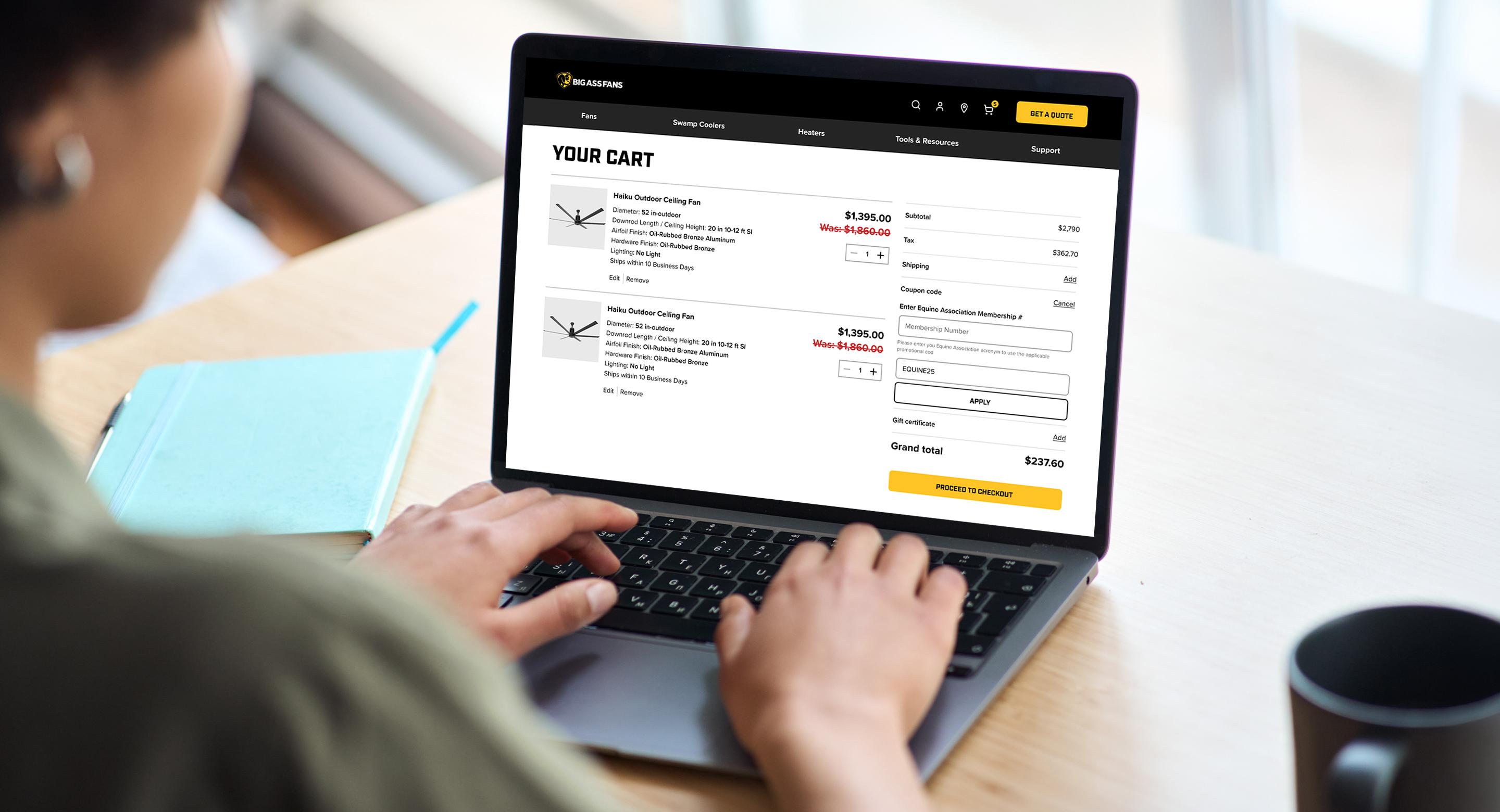
Big Ass Fans is a leading manufacturer of high-performance fans and lighting solutions, serving commercial, industrial, and residential customers across the globe. As the company prepared to scale its digital commerce operations across new markets, it needed a technology foundation that could match its ambitions. Big Ass Fans partnered with Orium to migrate the commerce layer to a composable architecture built on BigCommerce Catalyst, launching a performant direct-to-consumer experience while establishing a platform built for multi-region growth.
Partners involved:







The Challenge
Big Ass Fans set out to replace its existing Magento and WordPress stack with a composable architecture capable of supporting a high-performance DTC experience first in the US, quickly followed by Canada, Australia, and Singapore. The goal wasn't just to replatform, it was to do so in a way that wouldn't introduce new risk in the process.
The complexity of connecting new and legacy systems created real uncertainty, particularly around order orchestration through new middleware and digital asset management distribution across the new CMS. Internationalization added further challenges, as third-party integrations strained against the limits of the original multi-channel approach. The engagement also ran under a fixed-fee model, which demanded strict scope control, rapid prioritization, and clear decision-making to hit a tight delivery timeline.
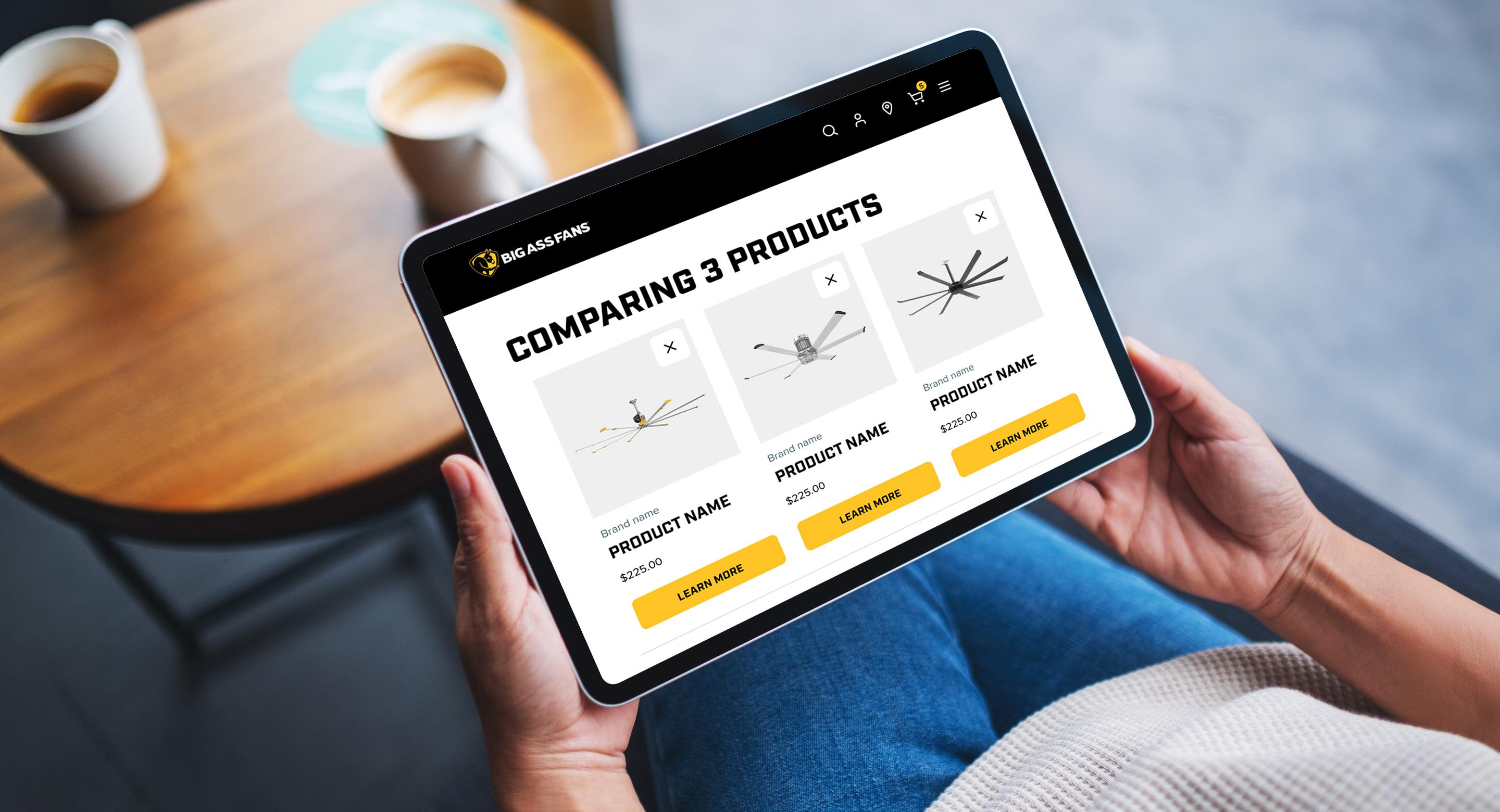
The Strategy
Orium approached the engagement with a structured Align → Build → Launch model, with significant investment in upfront discovery to surface risks before they could affect delivery.
The core strategy centered on de-risking early. EventStorming workshops were used to map business logic, uncover hidden dependencies, and create shared understanding across stakeholders before a line of code was written. This investment in alignment reduced downstream rework and gave the team a clear, prioritized backlog anchored to business value rather than feature volume.
As integration planning progressed, we identified the need for more flexible, region-specific configurations to support international payments, taxes, and catalogs. The team responded with a targeted architectural pivot to a multi-store strategy, allowing regions to operate independently while preserving shared components where possible. By leveraging Orium's accelerators and maintaining strong governance across Product, Delivery, and Technology, the team absorbed this change without material disruption to timeline, scope, or the core US delivery.
Orium brought a level of structure and foresight to this project that made a real difference. The discovery work they led early on helped us understand our own systems better and gave us confidence we were building on the right foundation.
The Solution
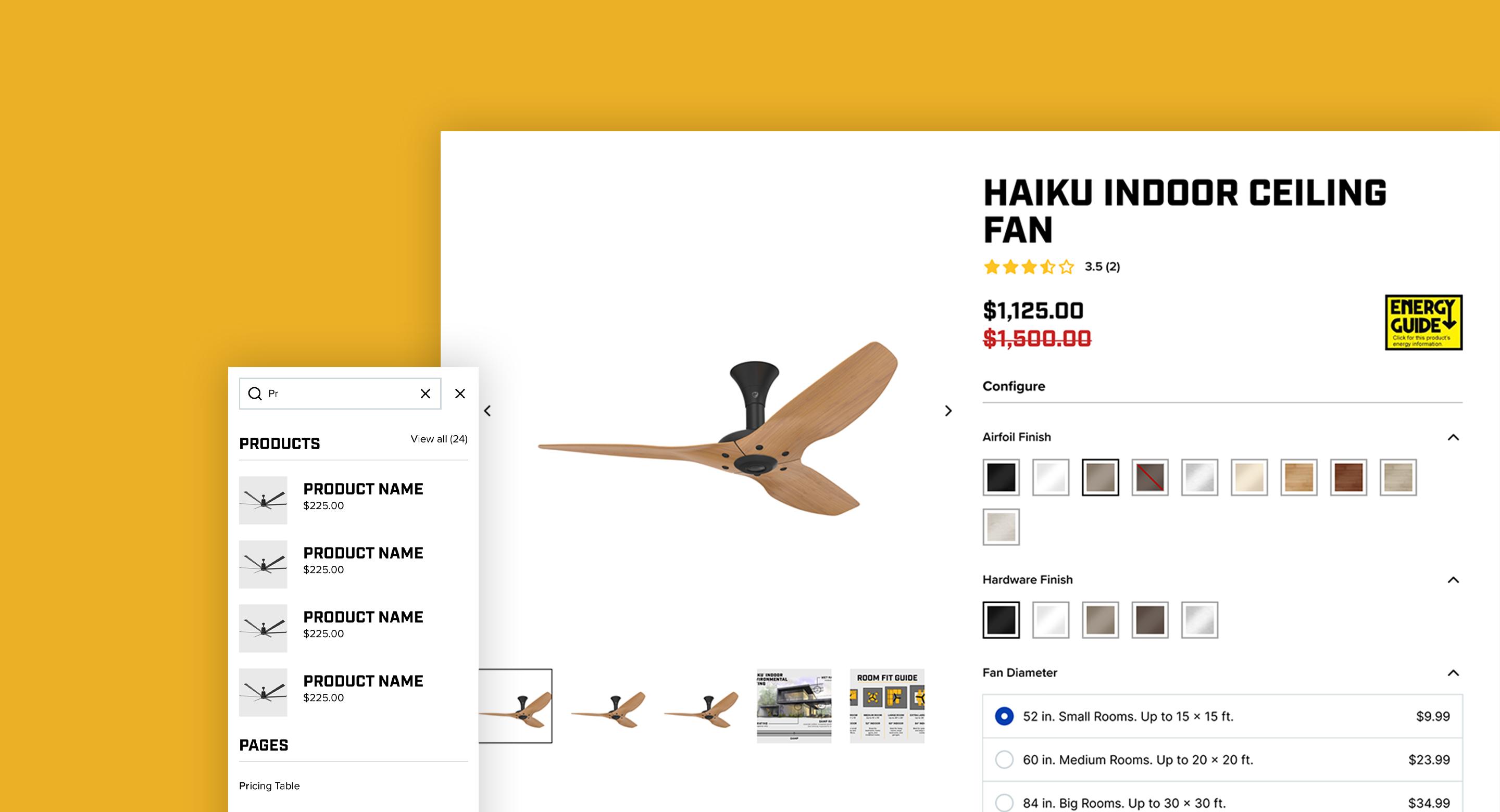
Orium delivered a composable commerce solution built on a modern, modular stack. BigCommerce served as the B2C commerce engine, paired with the Orium Accelerator and BigCommerce Catalyst at the frontend for scalable, reusable UI components. Netlify handled CI/CD and environment management, while MuleSoft connected internal systems across the integration layer and Acquia DAM provided API-driven access to digital assets. Analytics infrastructure was established through Google Tag Manager and GA4, creating a baseline for post-launch performance measurement.
A component-driven architecture sat at the heart of the build, ensuring the solution could evolve alongside the business rather than requiring significant rework as new markets and capabilities were added. Product data mapping and integration design were critical workstreams, ensuring clean interoperability across systems. Alongside implementation, the team maintained a continuously refined backlog and release plan, keeping scope tightly aligned to delivery constraints and business priorities throughout the engagement.
The solution balanced speed and scalability, delivering an MVP while setting the foundation for future regions and capabilities, which followed in short order.
What stood out about working with Orium was how aligned we were throughout the entire engagement. Clear ownership, fast decision-making, and a team that understood both the technical and business sides of what we were trying to achieve.

Outcomes and Next Steps
The engagement delivered a modern, global DTC experience backed by a composable architecture and clear ownership across Product and Delivery. Big Ass Fans now has an improved collaboration model for ongoing work and a foundation built to support what's next.
That foundation proved its value quickly: Big Ass Fans activated multi-region capabilities across Canada, Australia, and Singapore following the initial US launch, leveraging the multi-store architecture already built to accommodate regional differences in payments, taxes, and catalogs. Longer-term, the composable stack creates a clear path as the business continues to grow.