Article
Every Dashboard, Application and Agent Needs the Same Answers About Your Business
How to document what a product, an order, or a customer means, and make it reachable by anything that needs it.
AI programs start where the value is visible: a pilot, an assistant, a use case with a sponsor. The constraint sits further down. Your business has more worthwhile decisions in front of it than your people can route one at a time, because the systems underneath disagree about what a customer is and what a product costs. We build the layer that settles that, then operate it with you. What changes is how much you can have in motion at once.
Explore our other solutionsYour data sits across ERP, OMS, PIM, commerce, a warehouse, an MDM tool, and a decade of integrations, each describing a product or a customer a little differently. Somebody reconciles before anything moves, and that reconciliation is the tax: every price change, every quote, every new channel waits on a person to work out which answer is right. Meanwhile each team is adding agents that work from whatever records they can reach. Fix the layer underneath once and analytics, search, and every agent after this one draw on the same records and the same meanings.
Pipelines pull from every system you run into one flow, batch and real time. Two records describing the same product collapse into one, and the resolved record stays current as sources change. Nothing moves off its system of record, and connecting a new source is configuration work, not a project.
One customer, product, and order that every system and every agent reads, however many places touch it.
Downstream systems react to a change instead of waiting for tonight's batch, so nothing acts on yesterday's inventory.
Resolution happens across your systems, with each source keeping what it owns.
An ontology gives your business one set of meanings for products, customers, orders, inventory, and promotions, and names the system of record for each. A knowledge graph lets a query follow a relationship across the business, past the edge of any one system. Both work across the systems you already run, so the next tool you add inherits your definitions.

Every system queries the same definitions, so the next tool you add doesn't invent its own version of "available."
Answers that used to need several teams and a lot of back-and-forth now come from a single question.
Specs, manuals, reviews, and catalog data move through the same pipeline, with metadata and embeddings created at ingest.
One API and semantic layer in front of your systems means consumers stop wiring themselves in one at a time. Retrieval combines keyword, vector, and graph, so a query returns the right document, product, or answer with its sources shown. Reading is the easy half: when something acts on that answer, writeback updates the right systems in the right order.

Responses come from your own content and show where they came from, so anyone can check the source before acting.
MCP and API access, so an agent reaches your business through one governed surface instead of a bespoke integration per tool.
Add to cart, order creation, and returns run as governed orchestrations into your systems of record, not as best-effort calls.
People and agents reach data through interfaces that enforce permissions and leave a trail, so every answer can be traced and every action reconstructed afterward. That record is what turns a decision to automate something into a decision you can defend, and it is why the next thing you hand over is easier to approve than the last.

What an agent did and why, plus a record of identity, authorization, data access, and every action taken.
Everything discoverable and traceable, including where each answer came from, so the layer stays defensible as it grows.
Answer quality scored on every release and monitored live, so you can tell whether a change made things better.
Assessments and workshops that show what your data, content, and governance can support today, and what to fix first.
Give people, assistants, and agents one retrieval layer: hybrid search, cited answers, and permissions enforced at the source.
Define products, customers, and orders in an ontology and knowledge graph, where changing one definition updates every system using it.
Turn contested extracts into owned assets with a contract, a named owner, a refresh schedule, and traceable lineage.






A foundation that holds changes what the business can attempt. Decisions surface on their own. A new market or channel opens in weeks, because the records and the meanings are already there. Teams spend their hours on the judgment calls, not the handoffs between them. We build that layer with your engineers and operate it with you as sources, definitions, and answer quality change.

Engine-independent, built on the data, search, and semantic platforms you already run.










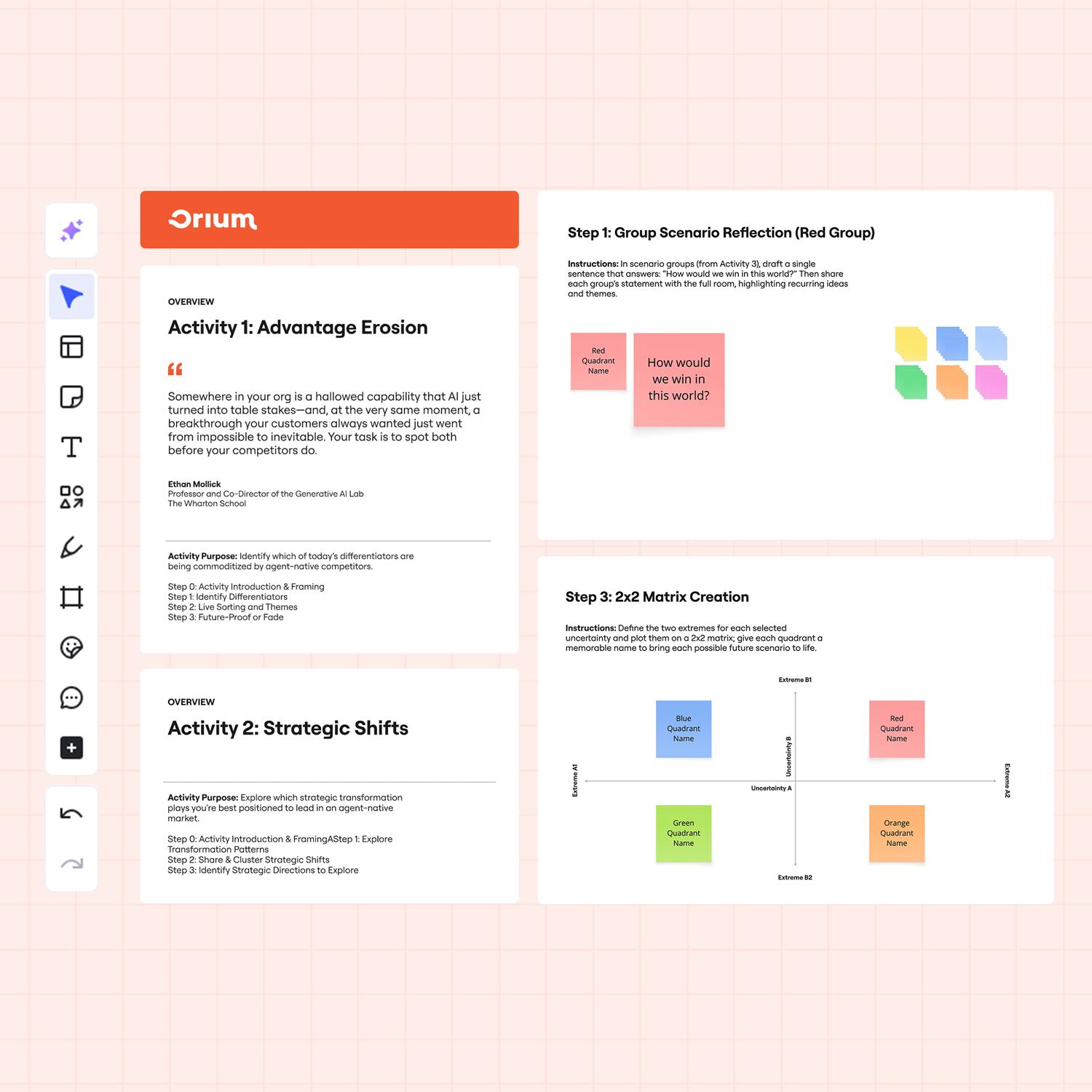
Orium's Agentic Strategy Canvas helps you pinpoint the right agent opportunities, map the workflows that matter, and define the guardrails for safe scaling. Or book a Studio session and partner with our experts to align quickly and move from concept to production with confidence.
Tell us what you're running and where the decisions pile up. We build the foundation underneath, and what your business can take on grows from there.

Practical thinking on the records, meanings, and product data that determine whether AI can answer for your business.
Article
How to document what a product, an order, or a customer means, and make it reachable by anything that needs it.

Article
What ACP, UCP, and the Stripe Agentic Commerce Suite actually require from your catalog, and why most brands aren't ready.
Report
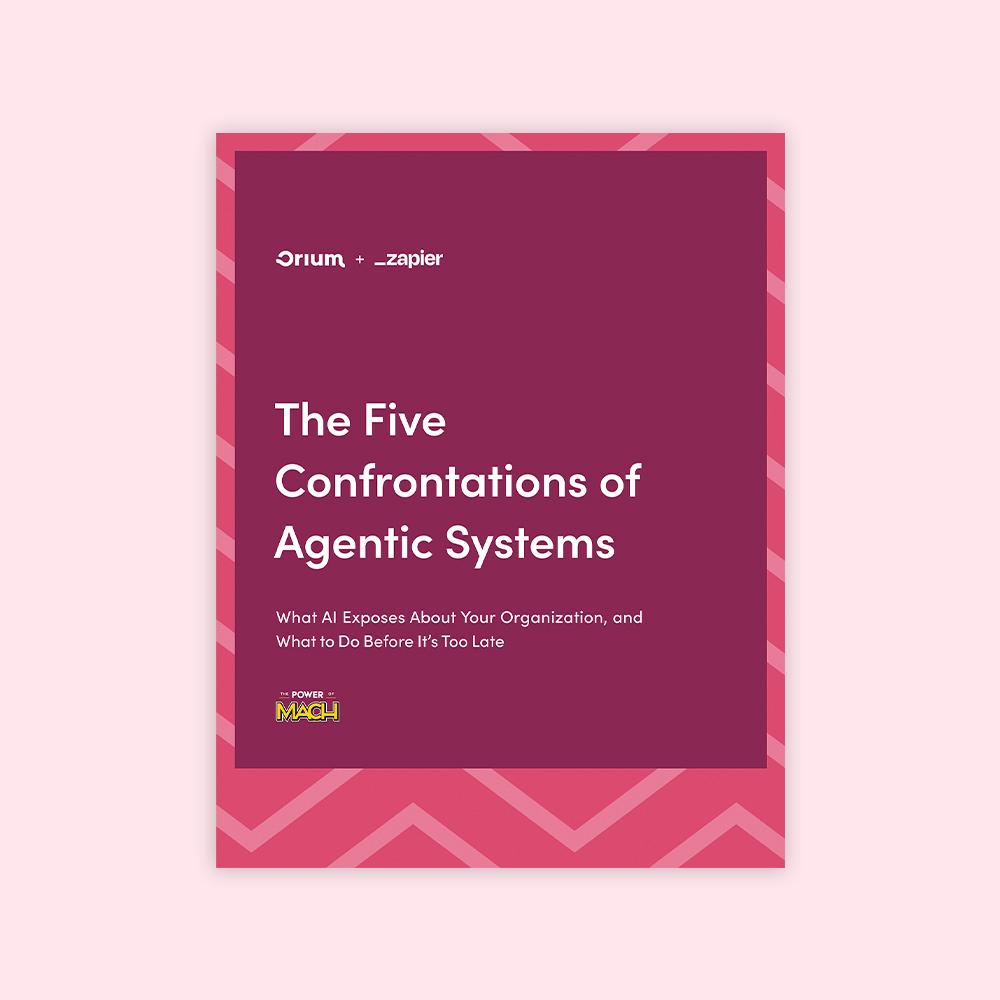
Five forces that decide whether your agentic AI initiative succeeds or quietly fails — a leadership diagnostic co-authored with Zapier.

Build modern commerce experiences with a composable foundation that improves performance, reduces complexity, and gives your teams more control.

Create cohesive digital experiences across every channel with structured content, connected data, and an architecture built to support AI-driven personalization and automation.
Transform how work gets done with agentic systems that coordinate decisions, actions, and automation across your stack, so your teams move faster and scale impact.