Replatforming the Frontend to Unlock Performance and Growth
Modernizing Belk's digital experience in under 60 days using Next.js, Vercel, and AI-assisted development to improve performance and accelerate iteration.
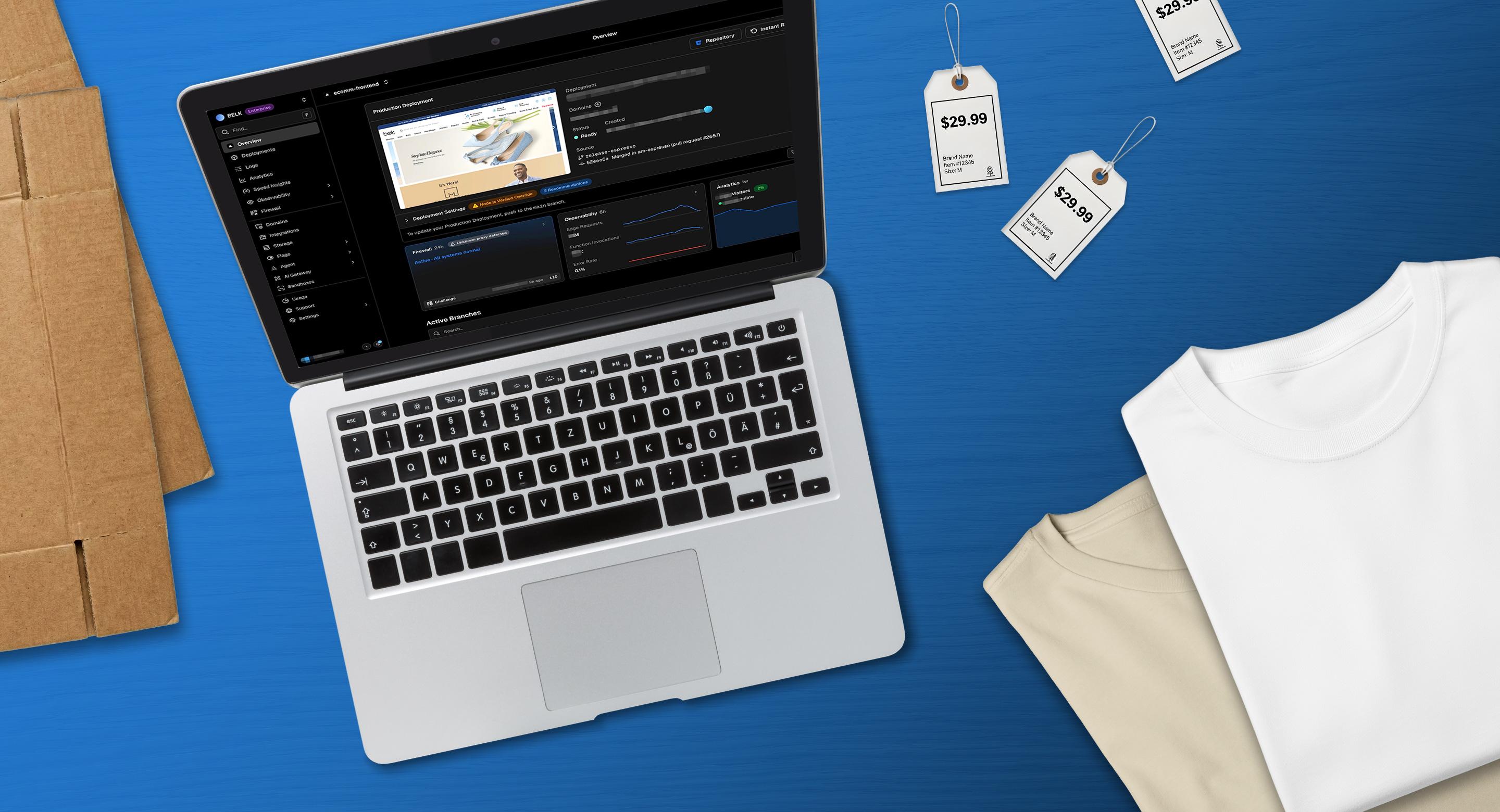
For more than a century, Belk has been a trusted name in American Southeast retail, operating nearly 300 department stores across 16 states. As customer expectations for speed and digital experience continued to rise, Belk identified an opportunity to modernize its online storefront without disrupting its existing commerce operations. Partnering with Orium, Belk replatformed its frontend in under 60 days using Next.js and Vercel, powered by an AI-assisted approach that accelerated delivery. The result was a faster, more performant customer experience built for continuous improvement.
Partners involved:



The Challenge
Belk's digital experience was constrained by frontend performance and architectural limitations. Although the brand had invested in modern commerce tooling, its customer-facing experience wasn't fully benefiting from those capabilities.
Pages were being reloaded on every interaction rather than behaving like a true single-page application, resulting in slower performance and unnecessary friction for shoppers. Internally, teams were working with a mix of legacy patterns, including jQuery-based interactions inside newer frameworks, which made development slower and harder to maintain. The challenge wasn't a lack of technology investment, but rather how those tools were being used together.
Belk needed to improve speed, stability, and conversion performance quickly, while also upskilling its internal teams and avoiding a risky, big-bang replatform.

The Strategy
From the outset, Orium and Belk aligned on a phased, frontend-first approach. Rather than replacing the entire commerce stack, the focus was on extracting maximum value from Belk's existing Salesforce investment while laying the groundwork for future composability.
A key differentiator in Orium's approach was the use of AI-assisted development tools, including Vercel v0, to accelerate component creation and iteration. While other vendors proposed larger, longer-term rebuilds, Orium demonstrated how a focused team, equipped with modern frameworks and AI tooling, could deliver meaningful results quickly without introducing unnecessary risk.
The strategy emphasized speed to value, close collaboration, and enablement, ensuring Belk's internal teams could understand, extend, and maintain the new frontend as it evolved.
The Solution
Orium partnered closely with Belk through a co-delivery model, embedding experienced developers alongside Belk's internal team. Together, they rebuilt the frontend experience using Next.js, leveraging the existing Salesforce (SFRA) APIs while significantly improving how content and interactions were delivered to the browser.
The rollout began with the homepage, allowing Belk to introduce the new Next.js experience alongside the existing site and expand it progressively as performance gains were validated. As confidence increased, additional pages were migrated, including category pages, product listing pages, and product detail pages. This phased approach minimized risk while delivering measurable improvements at each stage.
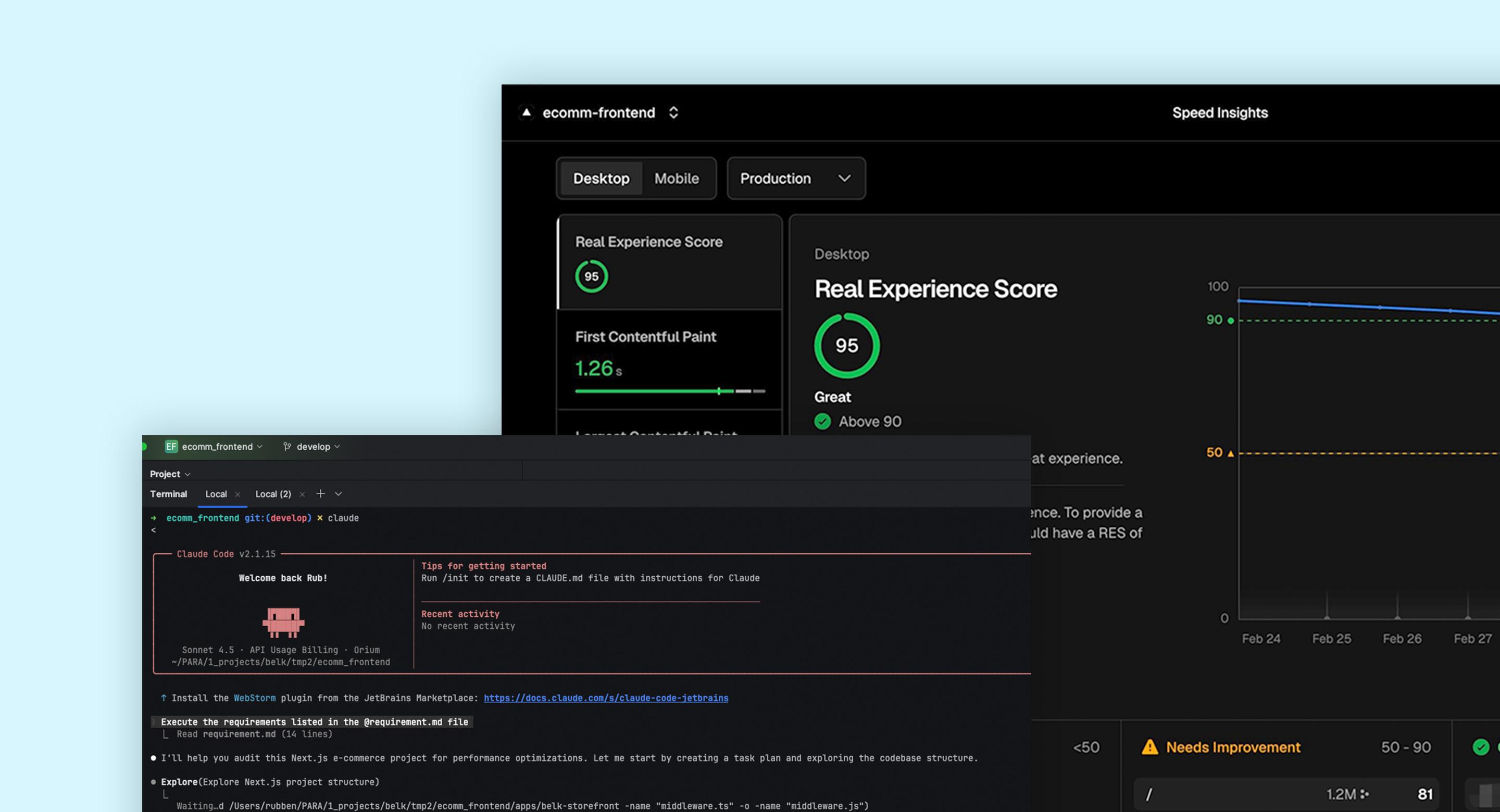
Vercel provided high-performance hosting, streamlined deployments, and improved observability, supporting rapid iteration throughout the project. Vercel v0 also played a role in accelerating frontend development, enabling faster prototyping and component iteration within a modern, Tailwind-based framework. Combined with a small, AI-enabled team, this approach helped Belk modernize its frontend in under 60 days.
Alongside implementation, Orium prioritized enablement. Belk's developers received hands-on training in Next.js best practices and modern frontend patterns, ensuring the internal team could confidently extend and evolve the new experience over time.
What set Orium apart was their ability to deliver real results quickly while keeping our team in the driver's seat. They didn't just replatform our frontend, they left us with a foundation we can grow on.

Outcomes & Next Steps
The results were immediate and measurable. Belk saw significant improvements in site performance and customer experience, including a reported lift in conversion rates following the rollout of the new frontend experience. Page loads were faster, interactions felt smoother, and the development team gained a clearer, more scalable way of working.
Perhaps most importantly, Belk now has a modern frontend foundation that supports continuous improvement rather than one-off optimization. With Phase 1 complete, the team has the flexibility to expand content capabilities, experiment more rapidly, and deliver more personalized customer experiences across key journeys.
By focusing first on frontend modernization, Belk was able to unlock greater value from its existing investments while gaining the speed and adaptability needed to evolve alongside customer expectations.